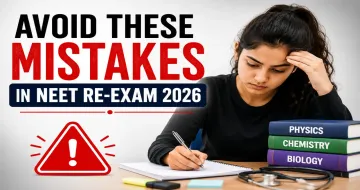
Avoid These Mistakes in NEET Re-Exam
The NEET Re-Exam 2026 is a crucial opportunity for students aiming to secure admission to top medical and dental colleges across India. While most aspirants focus on studying hard, many overlook common mistakes that can significantly impact their performance. Avoiding these errors can help you maximize your score and improve your chances of success.
In this blog, we will discuss the most common mistakes students make before and during the NEET Re-Exam 2026 and how to avoid them.
1. Ignoring the Updated Exam Pattern and Syllabus
One of the biggest mistakes candidates make is assuming that the exam pattern and syllabus remain unchanged every year. Always check the latest notifications released by the National Testing Agency (NTA).

What to Do:
- Download the latest syllabus.
- Review the exam pattern carefully.
- Stay updated with official announcements.
Many students panic before the exam and try to learn completely new chapters. This often leads to confusion and unnecessary stress.
2. Starting New Topics at the Last Minute
Many students panic before the exam and try to learn completely new chapters. This often leads to confusion and unnecessary stress.
What to Do:
- Focus on revising topics you have already studied.
- Strengthen your weak areas instead of exploring new concepts.
- Prioritize high-weightage chapters.
3. Neglecting NCERT Textbooks
A large portion of NEET questions are directly or indirectly based on NCERT concepts, especially in Biology.
What to Do:
- Revise NCERT Biology thoroughly.
- Read important diagrams, tables and examples.
- Focus on NCERT-based questions.
4. Not Practicing Mock Tests
Many students study theory extensively but fail to test their preparation through mock exams.
What to Do:
- Attempt full-length mock tests regularly.
- Practice under actual exam conditions.
- Analyze mistakes after every test.
5. Poor Time Management During the Exam
Spending too much time on difficult questions can reduce the time available for easier ones.
What to Do:
- Start with questions you are confident about.
- Avoid getting stuck on a single question.
- Keep track of time throughout the exam.
6. Ignoring Negative Marking
Guessing answers without proper understanding can lower your overall score due to negative marking.
What to Do:
- Attempt only those questions where you can eliminate options confidently.
- Avoid random guessing.
- Maintain accuracy along with speed.
7. Lack of Proper Revision
Some students keep solving new questions but fail to revise previously learned concepts.
What to Do:
- Create a revision schedule.
- Revise important formulas and concepts daily.
- Maintain short notes for quick revision.
8. Poor Sleep Before the Exam
Studying all night before the examination can affect concentration and memory.
What to Do:
- Get at least 7–8 hours of sleep before exam day.
- Keep your mind fresh and relaxed.
- Avoid excessive caffeine intake.
9. Forgetting Important Documents
Many candidates face unnecessary stress due to missing documents on exam day.
What to Carry:
- NEET Re-Exam Admit Card
- Valid Photo ID Proof
- Passport-size Photograph (if required)
- Other documents mentioned in the official guidelines
Keep everything ready a day before the examination.
10. Exam-Day Anxiety and Panic
Stress can negatively impact performance even if your preparation is excellent.
What to Do:
- Stay calm and confident.
- Avoid discussing difficult topics with friends before the exam.
- Focus on your strengths and trust your preparation.
Final Thoughts
The NEET Re-Exam 2026 is not just about how much you study but also about how effectively you utilize your preparation. By avoiding these common mistakes, maintaining a positive mindset and following a smart revision strategy, you can significantly improve your performance.
Remember, success in NEET comes from consistency, proper planning and confidence. Stay focused, trust your preparation and give your best effort on exam day.
Subscribe for 2026 Updates!
Latest Blogs
Read More



Become a member and stay up to date with our favorite topics and publications.