MBBS Abroad After NEET 2026: Complete Step-by-Step Admission Process
Every year after NEET, the same situation repeats.
Students wait for results, check expected cut-offs and then reality slowly starts sinking in. Not everyone gets a government seat. Private colleges are there, but the fees can go way beyond what most families are comfortable with.
And then comes that one option people start talking about MBBS abroad.

At first, it sounds confusing. Too many countries, too many opinions, too much mixed information online. Some say it’s the best decision, others say it’s risky.
So instead of overcomplicating it, let’s just understand one thing clearly
how do you actually apply for MBBS abroad after NEET 2026?
First things is NEET enough?
This is the most important part and many students get it wrong.
Yes, NEET qualification is mandatory if you want to study MBBS abroad and come back to India to practice.
Even if a foreign university says “NEET not required,” don’t ignore this. Without NEET, your degree won’t be valid in India later.
So before thinking about countries or universities, make sure you’ve at least qualified NEET 2026.
Step 1: Decide whether abroad is actually the right option
This step sounds simple, but it’s often rushed.
Don’t choose MBBS abroad just because:
-
your friends are doing it
-
or someone on YouTube said it’s easy
Ask yourself honestly:
-
Are you okay living away from home for 5–6 years?
-
Can your budget support studying abroad?
-
Are you ready to stay consistent without external pressure?
If the answer is yes, then moving forward makes sense.
Step 2: Choose the right country (don’t rush this)
This is where most confusion starts.
There are multiple options like:
-
Russia
-
Georgia
-
Kazakhstan
-
Kyrgyzstan
-
Philippines
Every country has its own pros and cons. Some are more affordable, some offer better clinical exposure, some have better infrastructure.
Instead of blindly following trends, try to match the country with your priorities:
-
Budget
-
Climate preference
-
Safety
-
Education quality
This one decision will affect your next 6 years, so take your time here.
Step 3: Shortlist universities (this matters more than you think)
Not all universities in a country are the same.
A common mistake students make is choosing the cheapest option available. That can backfire later.
While shortlisting, check:
-
Whether the university is NMC-approved
-
Medium of teaching (English preferred)
-
Hospital tie-ups for clinical exposure
-
Student reviews and results
Even spending a few extra days researching can make a big difference.
Step 4: Keep your documents ready
Once you finalize your university, the next step is documentation.
Usually, you’ll need:
-
10th and 12th mark sheets
-
NEET scorecard
-
Passport
-
Passport-size photographs
Some universities may ask for additional documents, but these are the basics.
It’s better to prepare everything early to avoid last-minute stress.
Step 5: Apply and get your admission letter
After submitting your documents, the university will review your profile.
If everything is fine, you’ll receive an offer letter or admission confirmation.
This step usually doesn’t take too long, but timelines can vary depending on the university.
Step 6: Pay initial fees and confirm your seat
To secure your admission, you’ll need to pay a part of the tuition fees.
This confirms your seat officially.
Make sure you:
-
Pay through proper channels
-
Keep receipts and proof of payment
Avoid any unofficial transactions this is where students sometimes make mistakes.
Step 7: Apply for a student visa
Once your admission is confirmed, the next step is the visa process.
This includes:
-
Filling the visa application
-
Submitting required documents
-
Attending an interview (if required)
The process depends on the country, but if your documents are clear, it’s usually manageable.
Step 8: Plan your travel and departure
After getting your visa, you’re almost done.
Now it’s about:
-
Booking your tickets
-
Arranging accommodation (hostel or apartment)
-
Packing essentials
This is the stage where it finally starts feeling real.
A few things students often ignore
While the process sounds simple, there are a few things that really matter in the long run:
-
You will have to clear FMGE/NExT to practice in India
-
Self-study is very important no one will force you
-
Adjusting to a new country takes time
-
Choosing the right university is more important than choosing the cheapest one
These things don’t show up in ads, but they matter a lot.
Final thoughts
Applying for MBBS abroad after NEET 2026 is not as complicated as it looks. But it’s also not something you should do without proper understanding. Take your time. Do your research. Ask questions. And once you decide, commit to it seriously.
Because in the end, it’s not just about getting admission somewhere it’s about becoming a doctor.
Subscribe for 2026 Updates!
Latest Blogs
Read More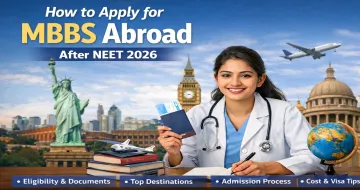




Become a member and stay up to date with our favorite topics and publications.